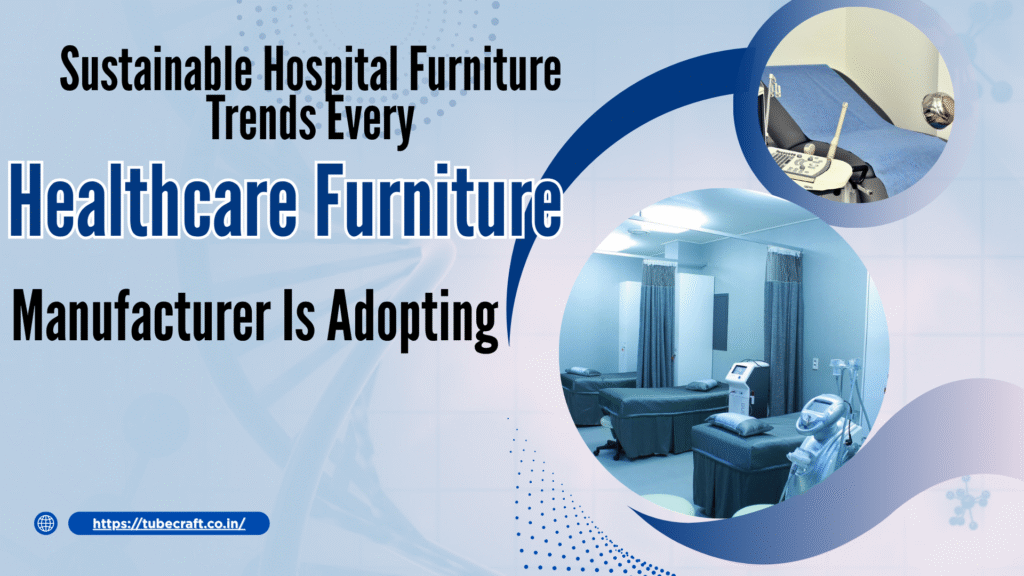
Sustainable Hospital Furniture Trends Every Healthcare Furniture Manufacturer Is Adopting
A hospital is more than a place for treatment — it’s a space where healing truly begins. One of the least acknowledged and most significant elements that shape that environment is hospital furniture. – Over the past few years, there has been a radical change. Healthcare furniture producers are adopting sustainable design principles and working to make their furniture greener, safer, and more sustainable. In this article, we shall explain:
- What sustainable hospital furniture is
- Why sustainability matters
- Key benefits and popular eco-friendly models
- Real trends from India and around the world
- How to choose the right sustainable furniture for your healthcare space By the end,
you’ll understand how this trend is reshaping hospitals — and how Tubecraft Industries, one of the leading furniture manufacturers in India, is driving the change.
What is Sustainable Hospital Furniture?
Sustainable hospital furniture is a type of furniture whose design, production, and disposal processes have been made eco-conscious. Unlike most furniture that incorporates dangerous finishes and non-recyclable components, sustainable hospital furniture incorporates and emphasizes:
- Eco friendly materials such as wood that is bamboo, metal that is recycled, or wood that is FSC certified
- Production processes that are carbon emission efficient
- Modular, durable, and long lasting designs that are easy to repair
- Recyclable to decommission landfills
This special consideration for furniture has enabled hospitals to minimize their environmental impact for a sustainable hospital furniture eco system, while also ensuring the safety of their patients and staff.
Why Sustainability Matters in Healthcare Furniture
The operations of hospitals is a non stop system. With over a third of the world’s population living in the vicinity, they have proudly earned the position of one of the stiffest resource spenders in the world. Everything from the chairs to the tables and even the beds, has a great impact on the environment. Healthcare Furniture Manufacturers have integrated sustainability for the following key reasons:
- Increasing the quality of Indoor Air – The removal of chemically reactive materials that are conventional increases VOCs to assist in advanced patient care.
- Cost Efficient – The ease and reduction of maintenance and replacement costs is enjoyed with modular functionality of the designs.
- Eco Responsibility – There is a proper balance of controlled emissions, energy consumption, and waste disposable.
- Compliance & Certifications – Meets IGBC and GRIHA green building norms in India.
- Positive Brand Equity – Demonstrate ESG commitment for patients and stakeholders.
The World Green Building Council states that sustainable health facilities have better patient recovery outcomes and lower operating costs, making sustainability a sound business decision, not just an ethical one.
Key Benefits of Sustainable Hospital Furniture
Investing in sustainable hospital furniture brings lasting value to hospitals and clinics:
- Increased Lifespan – The use of high-grade materials that can take constant use over time
- Reduced Total Cost of Ownership – Decreased expenditure due to lowered repair and replacement costs over time
- Enhanced Indoor Environment – Enhanced air quality due to the use of non toxic coverings
- Improved Ergonomics and Comfort – Aimed towards minimizing fatigue and injuries to the staff and patients
- Anticipatory Compliance – Meets changing green regulations and certifications
For example, Tubecraft Industries can extend the life for years by designing hospital beds and tables with modular parts that can be upgraded or replaced separately.
Eco-Friendly Materials Used in Hospital Furniture
Sustainable, durable, and safe materials are meticulously chosen by major manufacturers of hospital furniture:
- Recycled aluminum and steel – Recyclable, rustproof, and strong
- Bamboo and wood that is FSC certified – Responsibly sourced, renewable
- Finishes that are powder coated – Long lasting, non toxic, low VOC
- Laminates that are free of formaldehyde – Decreased indoor pollution
- Paint and adhesives that are water based – Replaces chemical laden finishes for safer options
- Biodegradable plastics – Non structural parts that are more environmentally friendly
Tubecraft’s hospital furniture integrates hybrid steel-wood designs that reduce raw material usage by nearly 30%, without compromising strength or aesthetics.
Popular Green Hospital Furniture Models
Today, almost every type of hospital furniture has an eco-friendly version. Common models include:
- Hospital Beds – motors with high-energy efficiency, modular steel frames
- Patient Chairs & Recliners – PVC-free upholstery with repurposed steel upholstery
- Overbed Tables – tops from certified, sustainably sourced wood joined to bases of lightweight aluminum
- Nurse Stations & Workstations – Modular, reconfigurable panels
- Waiting Area Seating – Stackable and made from recycled plastics
- Storage Cabinets – Non-toxic low VOC laminates with relief contours handles
Innovation of these models enhanced their practicality and value to achieve the elusive sustainability goals of hospitals.
Global and Indian Trends in Sustainable Healthcare Furniture
Global Trends
- Circular Economy – furniture made to be reused, refurbished, and fitted with new components, or recycled
- Intelligent Materials – surfaces and components that are self-sealing and self-healing, with antimicrobial decontaminating surfaces
- Furniture-as-a-Service – Models with lease options minimize the lifecycle waste and promote end-of-life recycling
Indian Trends
- Government Push for Green Buildings – Hospitals seeking GRIHA/IGBC ratings
- Growing Adoption by Corporate Chains – Apollo and Fortis piloting green furniture
- Rise of Indian Sustainable Hospital Furniture Manufacturers –Tubecraft who are pioneering modular, eco-friendly solutions.
Sustainability is projected to be the most important driver of growth for the global healthcare furniture market, which is predicted to surpass $9 billion by 2027 (MarketsandMarkets).
Challenges in Adopting Sustainable Hospital
While there are benefits to adoption, there are still barriers:
- More Expensive Upfront – Though lifecycle costs are lower, an initial budget can be a barrier.
- Lack Sights – Focusing on short term costs as a sole driver often miscalculates opportunities.
- Bound By The Supply Chain – Eco-certified raw materials are sporadically available.
- Few Design Specialists – Unfortunately, many manufacturers lack the ability to design sustainably.
To counter these issues Tubecraft bulk procures eco materials, client education on ROI, and modular engineering competition.
How to Make a Hospital More Operational with Sustainable Furniture
Here is a some list of steps to consider when you looking for sustainable furniture for hospitals:
- Check for certification like BIFMA, ISO 14001, FSC, GreenPro, and other relevant certifications
- For safety and recyclability, check the materials.
- Assess ergonomic and structural rigidity
- Consider modular, upgradable configurations
- Assess Life cycle costs as opposed to the upfront costs
- Purchase from reliable manufacturers of healthcare facilities furniture with proven sustainability
This way, the furniture is kept safe, durable, and future-ready.
Price of Eco-Friendly Hospital Furniture in India
Sustainable hospital furniture can cost slightly more initially but offers major long-term savings.
| Furniture Type | Typical Price (₹) |
| Hospital Beds | ₹25,000 – ₹1,00,000+ |
| Patient Chairs | ₹5,000 – ₹25,000 |
| Overbed Tables | ₹4,000 – ₹12,000 |
| Modular Nurse Stations | ₹50,000 – ₹2,00,000+ |
| Waiting Area Seating | ₹3,000 – ₹10,000/seat |
Over a 10-year lifecycle, these products often cost 30–40% less than conventional furniture
The Future of Sustainable Hospital Furniture
The coming years will bring exciting innovations from healthcare furniture manufacturers:
- AI-based design optimization to reduce material waste
- IoT-enabled smart furniture for asset tracking and maintenance
- Closed-loop recycling systems within manufacturing plants
- Furniture leasing models to promote reuse and reduce landfill waste
Sustainability is no longer just a “trend” — it’s becoming the standard in healthcare furniture design.
Conclusion
The reversible impact of sustainable hospital furniture is the enhancement of the healthcare interior design. It serves to improve patient well-being, reduce carbon footprint, and improve cost savings. With more and green compliant healthcare design, collaborating with seasoned designers will surely prove beneficial.
The Resouce Center of Tubecraft Industries Throughout the country, Tubecraft Industries is one of the most reputable manufactures of furniture for schools, hospitals, and other institutions.
For more than a couple of decades, Tubecraft has been making:
- Modular, ergonomic hospital furniture like beds, tables, seats, and storage systems
- BIFMA and ISO level certified sustainable healthcare equipment
- Environmentally responsible practices that reduce resource depletion and waste
Want to have a ready to build healthcare facility? Email Tubecraft Industries for bespoke eco-friendly hospital furniture.